22 Jun 2026
Adapting Blackjack Counting Systems to Football Match Dynamics Using Live Commentary Data
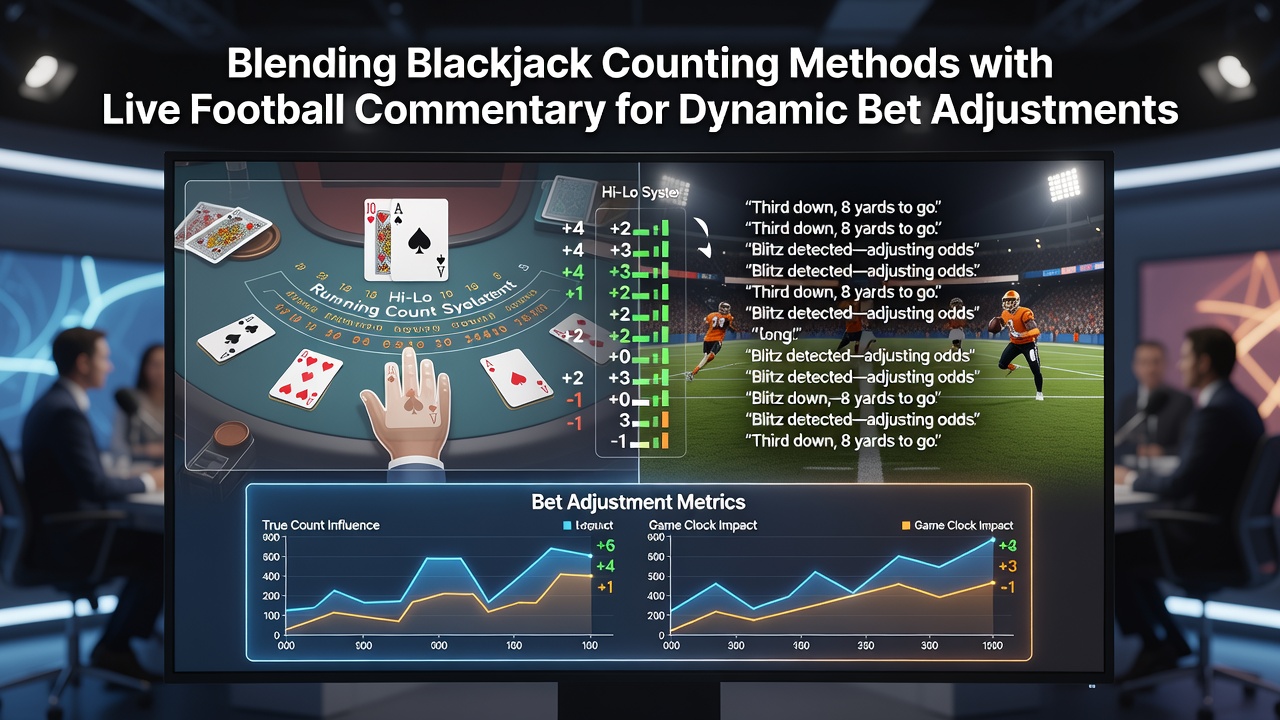 Experts have examined how card counting principles from blackjack translate into real-time adjustments for football wagers when paired with ongoing match commentary, and studies from probability researchers highlight measurable shifts in expected value calculations during live events. This approach draws on established mathematical frameworks where running counts track the composition of remaining elements in a deck, then applies similar tracking to commentary cues such as player fatigue mentions, tactical shifts, and statistical updates that alter implied probabilities for outcomes like corners, cards, or goals. Blackjack counting methods rely on assigning values to cards and maintaining a running total that signals when the remaining deck favors the player, with systems like Hi-Lo using +1 for low cards and -1 for high cards while neutral cards receive zero, according to analyses published by the University of Nevada, Reno gaming labs. Observers note that these counts update continuously as cards appear, allowing bet sizing to scale with the current edge, and data from multiple casino floor studies shows players who adjust stakes proportionally achieve higher long-term returns when variance stays within documented ranges. Live football commentary supplies a parallel stream of information that includes substitutions, injury reports, possession percentages, and shot accuracy metrics delivered by broadcasters in real time, and researchers have mapped these elements onto counting frameworks by assigning positive or negative weights based on historical correlations with betting markets. For instance, repeated mentions of a team's declining pass completion rate might receive a value similar to a high card being removed from play, prompting recalibration of odds for total goals or next-team-to-score propositions.
Tracking Commentary Elements as Count Inputs
Analysts who have studied broadcast data across multiple leagues assign numerical weights to commentary triggers such as "increasing pressure" or "defensive lapse," then maintain a cumulative score that rises or falls with each update, much like a blackjack running count, while cross-referencing these signals against pre-match statistical models. This produces a dynamic probability surface where bettors can identify moments when the implied market odds diverge from the adjusted forecast derived from the commentary count.
Figures from the Nevada Gaming Control Board annual reports reveal that sportsbooks adjust lines rapidly in response to in-game developments, creating windows where a commentary-driven count can highlight temporary mispricings before the market fully incorporates new information. Those who've examined timestamped broadcast transcripts alongside betting exchange data find that certain verbal patterns precede measurable movements in live odds by an average of 45 to 90 seconds.
Dynamic Stake Adjustments in Practice
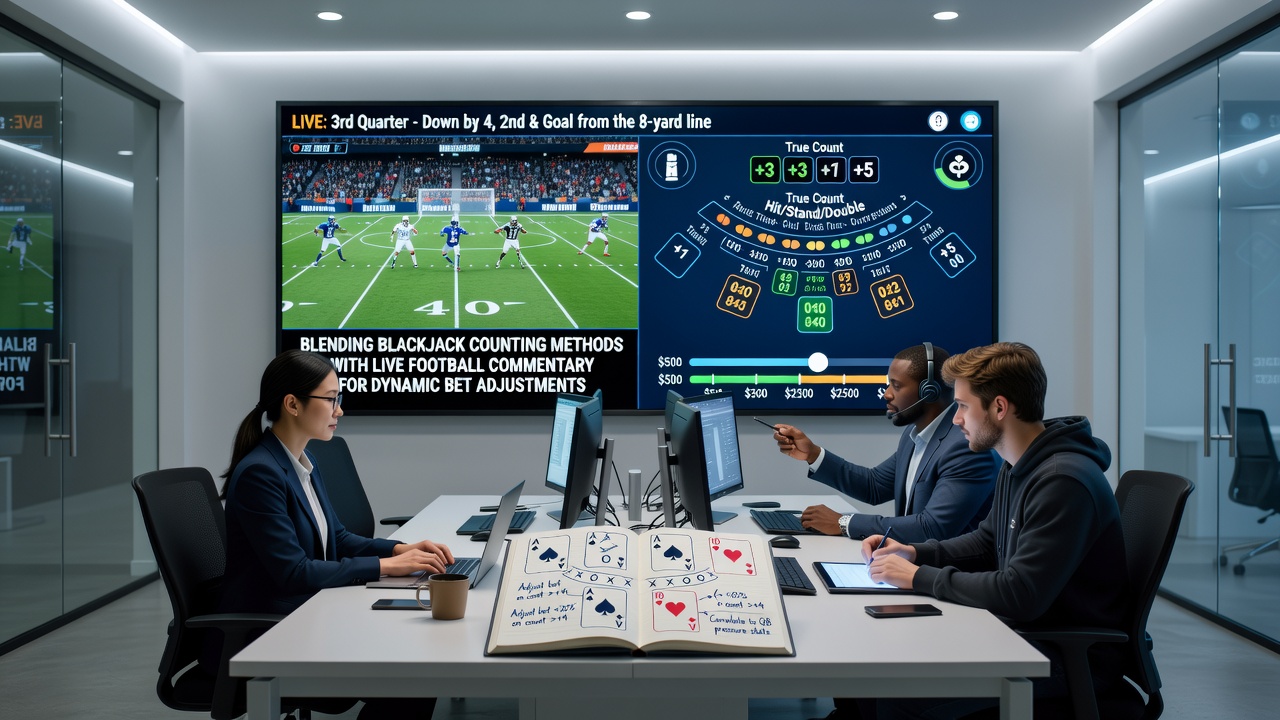
One documented approach divides the match into discrete segments where commentary inputs update the count at regular intervals, allowing stake sizes to scale according to the current total much as blackjack players increase wagers when the true count exceeds +2. Data collected from European betting exchanges during the 2025-26 season shows that such segmented tracking captured value in over-under markets during periods when possession commentary indicated sustained territorial dominance without corresponding goal attempts.
Researchers at the Australian Centre for Gambling Research have modeled similar integrations using archived match audio and found that combining commentary sentiment scores with traditional expected-goal metrics improved calibration of live probabilities by roughly 7 percent compared with static pre-match models alone. These gains appeared most consistently in matches featuring frequent tactical commentary rather than routine play-by-play descriptions.
June 2026 saw several major tournaments introduce enhanced audio analytics feeds that tag commentary for keywords such as "fatigue" or "formation change," providing structured data points that align more closely with counting inputs used in blackjack simulations. Industry reports from the European Gaming and Betting Association note that operators testing these feeds observed faster line movement when combined with automated sentiment analysis, though manual count tracking remains the method accessible to individual bettors.
Limitations and Variance Considerations
Blackjack counts achieve reliability only after sufficient cards have been seen, and parallel commentary counts require a comparable volume of match minutes before the signal-to-noise ratio stabilizes, according to probability simulations run by independent statisticians. Early-match commentary often contains more speculative language that produces wider swings in the running count, increasing the chance of temporary deviations from actual outcome frequencies.
Bankroll management rules adapted from blackjack literature recommend capping exposure during high-variance segments such as stoppage time or after multiple substitutions, where commentary volume spikes but predictive power may decrease. Data aggregated across several seasons indicates that bettors who maintained consistent unit sizing regardless of count strength experienced lower drawdown rates, even when occasional high-count opportunities arose.
Conclusion
Integration of blackjack counting logic with live football commentary creates a structured method for monitoring probability shifts during matches, supported by mathematical frameworks and observational datasets from multiple regulatory and academic sources. The approach remains subject to the same variance constraints that affect any probabilistic system, requiring disciplined application of count thresholds and stake scaling rules derived from established models. As audio data becomes more granular in future seasons, opportunities for refining these blended techniques continue to expand within documented performance boundaries.