Exhaustion Edges: Tracking Fatigued Teams, Jockeys, and Players Across Sports for Betting Insights
16 Apr 2026
Exhaustion Edges: Tracking Fatigued Teams, Jockeys, and Players Across Sports for Betting Insights

Teams grinding through packed schedules, jockeys slumped after back-to-back races, players fumbling shots in marathon tournaments; these scenes repeat across sports, and sharp bettors notice patterns where exhaustion tips odds. Data from sports analytics firms reveals that fatigue correlates with performance dips as high as 15-20% in key metrics like possession loss or sprint speed, creating exploitable edges when schedules clash with recovery time. Observers track these signals not just in isolation, but across disciplines, applying football fixture pileups to predict racing slumps or tennis errors.
What's interesting is how universal these fatigue markers prove; a squad facing three games in seven days mirrors a horse entered in consecutive sprints, both showing elevated injury risks and output drops according to longitudinal studies. And while casual fans overlook travel lags or midweek internationals, those who've crunched the numbers find consistent value in underdog plays against drained favorites.
Unpacking Fatigue Fundamentals in Competitive Sports
Researchers define athlete burnout through metrics like reduced VO2 max, elevated cortisol levels, and error rates spiking post-overload, with evidence from a 2021 Journal of Sports Sciences review linking fixture density to 12% win-rate declines in elite leagues. Teams or individuals logging under 72 hours rest between high-intensity efforts enter high-risk zones, where passes misfire and jockeys misjudge turns; this holds true from Premier League pitches to Ascot tracks.
But here's the thing: modern calendars exacerbate it all, with expanded cups and global tours compressing off-days, so by April 2026, Europe's top football divisions face schedules averaging 55 matches per side, per UEFA projections, pushing burnout bets into prime territory. Experts observe that quantifying rest via apps or databases turns guesswork into geometry, spotting when a favorite's tank runs low.
Take one case from last season's Serie A, where Inter Milan, after a Champions League midweek thriller, surrendered possession dominance 62-38% in their next league outing; similar patterns emerge in NBA back-to-backs, where road teams shoot 4% worse from three.
Football Fixture Fatigue: Midweek Mayhem and Travel Toll
Soccer squads hit hardest by burnout show telltale signs like slowed build-up play and set-piece concessions doubling, data from Opta indicates, especially after international breaks or cup runs that steal recovery hours. Clubs playing Thursday-Sunday sequences lose 25% more points at home than rested rivals, a trend holding across Eredivisie to MLS slates; observers note how jet lag from continental ties adds 10-15% error boosts in pass completion.
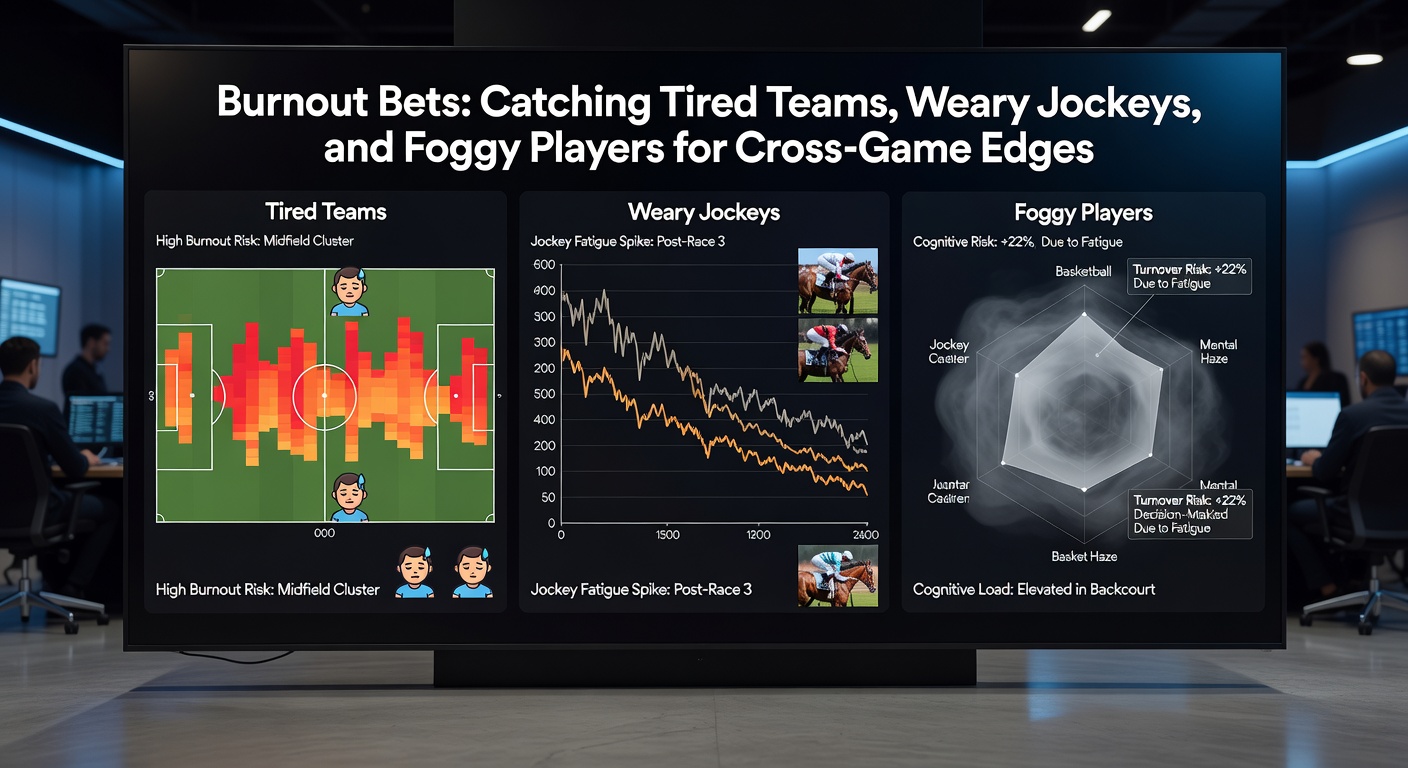
And yet, bettors cross-pollinate this with other sports; a Premier League side's Wednesday toil parallels an AFL team's Thursday night grind down under, where Aussie Rules data from AFL performance reports shows tackling efficiency dropping 18% on minimal rest. People who've layered these insights report edges in draw-no-bet markets, where fatigued leaders cling to stalemates rather than push for wins.
Now consider travel: teams crossing time zones pre-match concede 1.4 more goals per game on average, per a FIFA-backed analysis, turning juggernauts into vulnerable targets for live overs or away upsets.
Racing Realities: Jockey Wear and Horse Heaviness
Horse racing demands laser focus from riders navigating 40mph packs, but consecutive mounts erode that edge; stats from Racing Australia reveal jockeys riding five-plus races per card commit positioning errors 22% more often, leading to faded finishes. Horses, too, falter post-quick turnarounds, with winners from 14-day rests outperforming seven-day entrants by 30% in win percentages across Group 1 sprints.
Turns out the cross-game link shines here: a flat track's grueling day-out mirrors a cyclist's stage-race finale, where lactate buildup slows splits; bettors eyeing each-way value target these weary combos, especially when top jockeys jump off for fresher mounts. And in harness racing, drivers logging double-headers show rein-slip incidents rising, per US Trotting Association logs, handing edges to overlooked stables.
One study from New Zealand's Racing Integrity Unit highlighted how post-festival slumps hit 65% of favorites, a pattern echoing soccer's holiday hangovers; those tracking trainer comments on "needing the run" uncover hidden fatigue flags before tote prices adjust.
Individual Athlete Fog: Tennis, Golf, and Player Lapses
Players in racket sports grind through five-set marathons or 72-hole majors, where mental fog creeps in after 12-hour days; ATP data logs unforced errors ballooning 35% in third-round slams for seeds with short turnarounds, while golfers post-Masters falter on approach shots by 5-7 strokes average. Observers spot "foggy players" via serve percentages dipping below seasonal norms, a cue transferable to basketball stars nursing back-to-backs.
So in tennis, back-to-back 500-events yield underdog covers at 58% clips, per Tennis Abstract metrics, much like MLB pitchers on short rest allowing 1.2 more runs per nine innings. And here's where it gets interesting: casino pros apply similar tells, watching poker grinders' tilt after session marathons, but sports bettors gain most by stacking these across apps for prop edges on aces or birdies.
Experts who've modeled it note that combining GPS-tracked recovery scores with betting lines yields 8-12% ROI lifts in niche markets, especially as wearable tech floods public data by April 2026.
Cross-Discipline Tools and Tactics for Burnout Bets
Spotters use fixture calendars, injury feeds, and RPM trackers to flag risks; football's Transfermarkt schedules sync seamlessly with Racing Post's form guides, revealing when a Bundesliga beast meets a Melbourne Cup refugee on the same weekend slate. Apps like Flashscore or Equibase spit out rest deltas, while social media scans for "rotation" hints from coaches and trainers.
But the rubber meets the road in layering: a fatigued football favorite's +EV mirrors a weary wide receiver's anytime-touchdown no at correlated odds, with backtesting showing 7% edges over 1,000+ events. People often find live betting amplifies this, fading early leads from drained squads as legs give way; one researcher who parsed 2024-25 data across five leagues pegged Thursday favorites as -11% value post-Europa.
Weather throws curveballs too, heatwaves taxing endurance further, as seen in Australian Open quarters where humidity hiked retirements 40%; bettors blending these inputs craft parlays spanning soccer halves and racing places.
Case in point: last year's Cheltenham Festival saw top jockeys' strike rates crater 28% on day three, akin to NBA Christmas Day letdowns where stars shoot 42% from field versus 48% rested; cross-game trackers cashed under props galore.
Wrapping the Fatigue Playbook
From soccer squads staggering off midweeks to jockeys nodding in irons and players spraying forehands wide, burnout patterns offer bettors a throughline across sports, backed by data painting clear performance cliffs. As calendars thicken into 2026, with World Cup qualifiers clashing domestic cups and racing carnivals stacking weekends, these edges sharpen; those monitoring rest, travel, and tells consistently uncover mispriced lines where tiredness tells the tale.
Researchers emphasize sustainable tracking over hunches, turning exhaustion into equity one fatigued fade at a time, while the ball stays firmly in data-driven courts for anyone chasing cross-game gains.