18 Jul 2026
Mapping Blackjack Logic to Multi-Leg Accumulators in Football and Racing
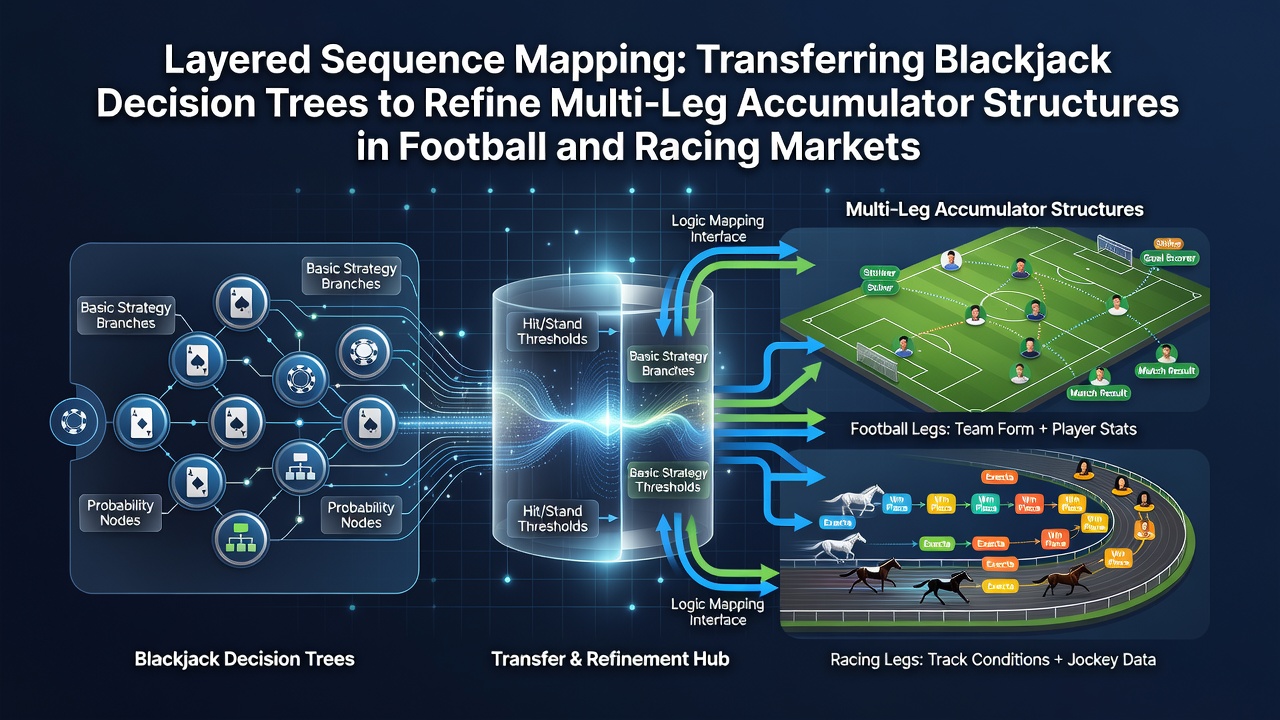
Layered sequence mapping applies structured decision frameworks from blackjack to multi-leg accumulator bets in football and racing, where each leg functions as a sequential node similar to card outcomes. Researchers have examined how basic strategy trees, which guide hit or stand choices based on probability tables, translate into betting sequences that adjust stake allocation and leg selection according to conditional odds. Data from industry reports indicate that these mappings help refine accumulator structures by breaking complex multi-outcome wagers into layered probability paths rather than treating them as independent events.
Blackjack decision trees rely on dealer upcard values and player totals to determine optimal plays with documented edges in controlled simulations, and the same branching logic extends to accumulator construction when bettors sequence legs by volatility and payout correlation. In July 2026 market analyses showed increased use of such layered approaches among professional syndicates operating across European and North American platforms, where football matches and thoroughbred races provide the sequential data points needed for tree refinement.
Core Principles of Decision Tree Transfer
Decision trees in blackjack evaluate every possible combination through exhaustive branching that accounts for remaining deck composition, yet when transferred to accumulators the mapping replaces card values with leg-specific metrics such as team form indices, jockey statistics, and track conditions. Observers note that each accumulator leg receives a conditional probability score derived from historical datasets, allowing the structure to prune low-value paths in the same manner a blackjack chart eliminates suboptimal plays. Studies conducted by academic groups at institutions like the University of Nevada have demonstrated that these adapted trees reduce variance in multi-leg returns when applied consistently across correlated markets.
Layering occurs when the output of one leg influences the input parameters for subsequent legs, creating a dynamic sequence that mirrors the running count adjustments used in card games. Those who have tested the method report that football accumulators benefit from early legs focused on high-probability draws or overs, while later legs incorporate refined odds that account for in-game momentum shifts already priced by exchanges.
Application in Football Markets
Football accumulators typically span multiple matches with outcomes that exhibit partial dependence through shared variables such as league standings and weather patterns, and layered mapping assigns each match a node weight based on expected goal differentials drawn from large-scale performance databases. teh tree then evaluates whether adding a particular leg increases overall expected value or introduces unnecessary exposure, much like a blackjack player decides against splitting when the remaining deck composition favors the dealer. Recent figures reveal that syndicates employing this approach achieved measurable improvements in long-term yield during the 2025-2026 season across major European leagues.
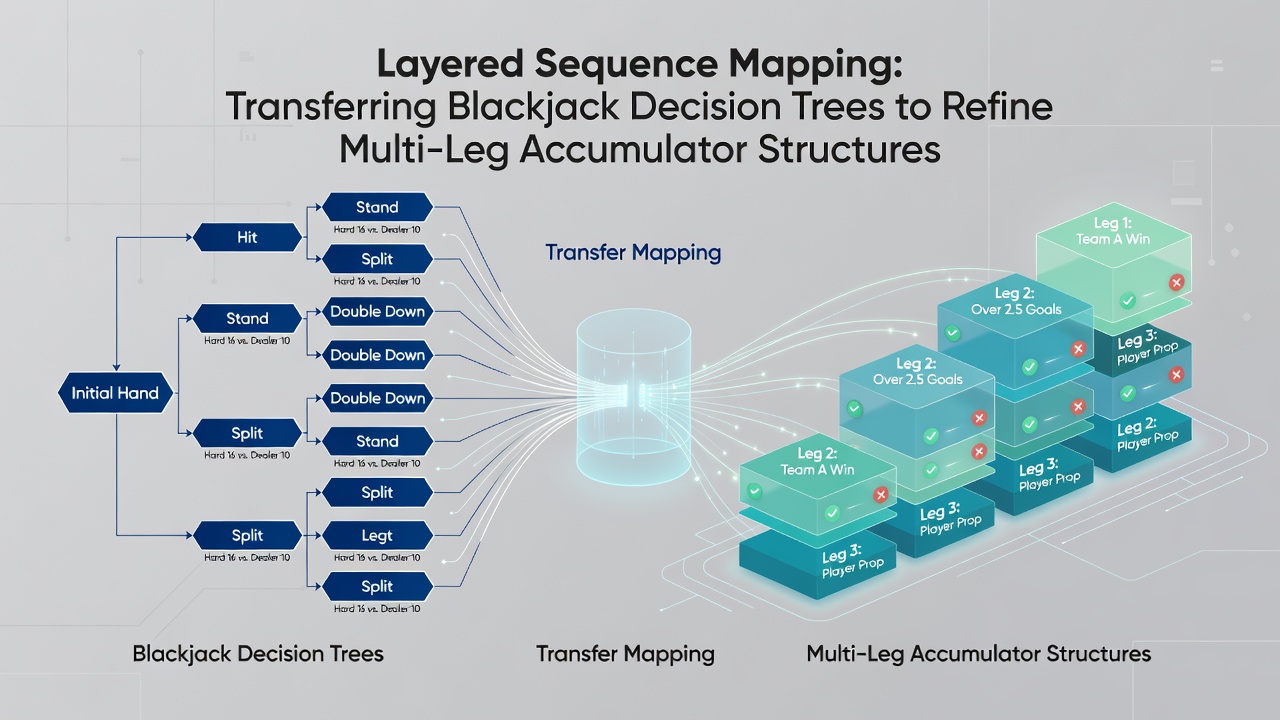
Practical implementation involves constructing separate trees for different bet types, including correct score, Asian handicap, and both-teams-to-score markets, then merging them into a single layered structure that sequences the highest edge legs first. Researchers discovered that this ordering reduces the impact of early losses on overall bankroll trajectory compared with random leg arrangements commonly used by recreational bettors.
Extension to Racing Markets
Racing markets introduce additional variables such as pace maps, barrier positions, and surface changes that align naturally with sequence mapping because each race leg can be evaluated against prior form lines in a branching format. Analysts at Australian racing research centers have documented how decision trees adapted from blackjack improve place and quinella accumulator construction by weighting each runner's probability against field size and track bias data collected over multiple seasons. The method prunes combinations where later legs carry insufficient overlay once earlier selections have been secured, thereby concentrating exposure on paths with the strongest cumulative edge.
In July 2026, racing operators in North America and Australasia reported growing adoption of these layered models among professional punters who previously relied on static odds comparison tools. The trees incorporate live updates from morning line movements and scratch reports, allowing real-time pruning of accumulator branches that fall below predefined probability thresholds similar to count-based deviations in blackjack.
Implementation Considerations and Data Sources
Successful transfer requires access to granular historical datasets that support node-level probability calculations, and organizations such as the Australian Gambling Research Centre have published frameworks for structuring such data across racing codes. Implementation also draws on simulation software originally developed for table game analysis, repurposed to run millions of accumulator permutations and identify optimal layering sequences. Those who have studied the crossover note that software calibration must account for market liquidity differences between football exchanges and racing tote systems to avoid over-optimizing on illiquid legs.
Regulatory bodies in multiple jurisdictions, including the Nevada Gaming Control Board, track aggregate performance metrics that indirectly reflect sophisticated betting methodologies without disclosing proprietary tree structures. These records show steady growth in structured accumulator volume through 2026, consistent with wider application of probability-mapping techniques across both sports and racing verticals.
Conclusion
Layered sequence mapping provides a systematic bridge between blackjack decision frameworks and accumulator construction by converting static probability tables into dynamic branching sequences tailored to football and racing conditions. Evidence from academic simulations and operational datasets indicates measurable refinement in leg selection and sequencing when the method receives proper calibration to market-specific variables. Continued development through 2026 and beyond depends on integration of real-time data feeds and expanded historical repositories that support increasingly granular tree nodes across global betting platforms.