30 May 2026
Mental Anchors Guiding Wagering Choices Across Varied Betting Arenas
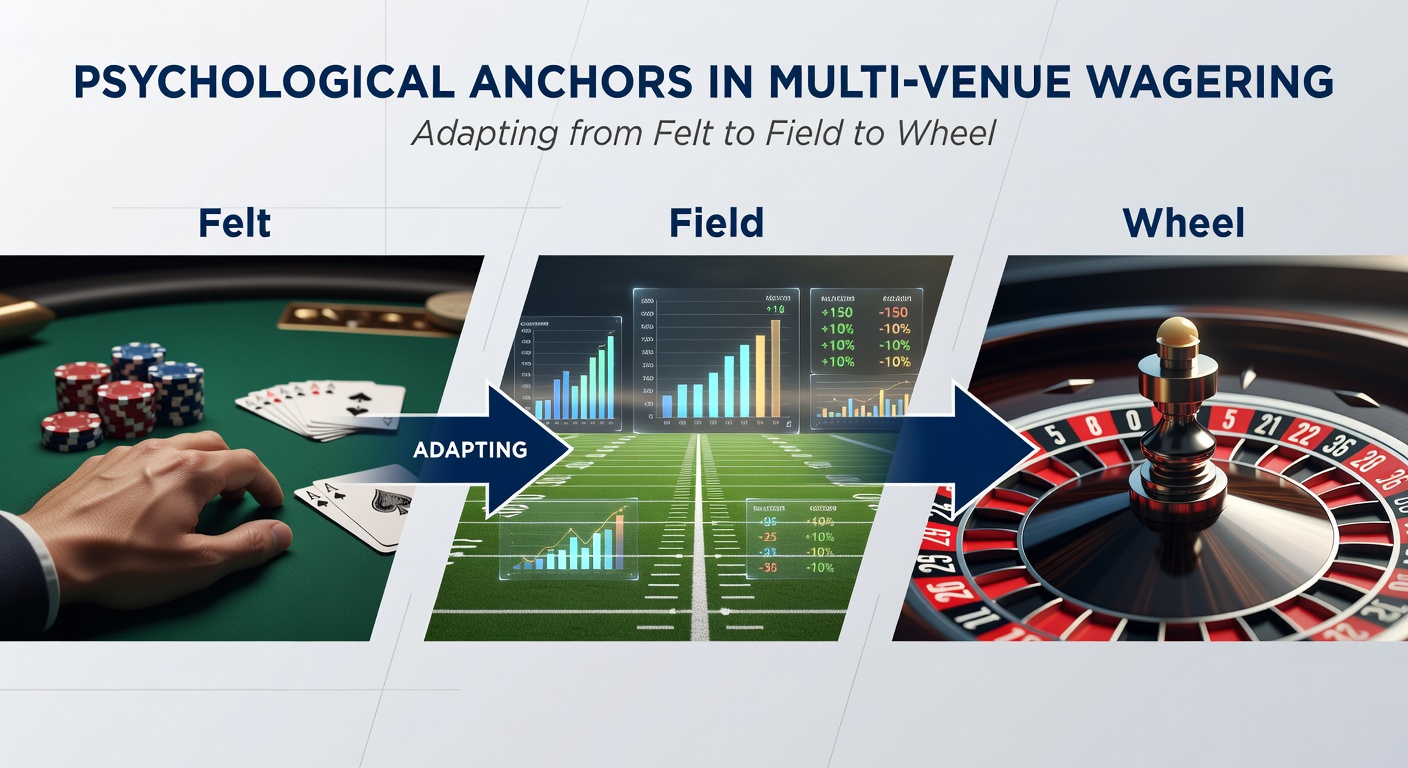
Psychological anchors shape decision making in multi-venue wagering because initial reference points established early in one setting carry forward when participants move to others, and researchers have documented this pattern across poker tables, athletic fields, and casino wheels since the foundational work on anchoring bias emerged decades ago. Bettors form these anchors through exposure to opening odds, prior outcomes, or table limits, then apply them unconsciously when switching venues even though each environment demands distinct adjustments in risk assessment and stake sizing.
Core Mechanisms Behind Anchoring in Wagering Contexts
Studies show that anchors function as cognitive starting points which bias subsequent judgments, and this effect appears consistently whether individuals evaluate poker hand ranges on felt surfaces or calculate implied probabilities during live sports events. Data from controlled experiments reveal that participants exposed to high initial figures tend to settle on higher final estimates than those given lower starting values, while the magnitude of adjustment remains insufficient to fully offset the initial influence. Observers note that this pattern holds when bettors transition from card rooms to racetracks or roulette layouts because the underlying mental process stays the same even as the available information changes.
Evidence suggests venue-specific cues strengthen particular anchors, such as the size of the big blind at a poker table or the morning line odds posted for a race, and these cues then interact with personal history when new wagers arise. In May 2026 researchers at several international centers released updated longitudinal findings confirming that frequent multi-venue participants exhibit stronger carryover effects compared with single-venue specialists, with effect sizes ranging between 12 and 18 percent on average stake adjustments.
Adaptation Patterns Observed from Tables to Fields
Those who move regularly between poker and sports betting demonstrate measurable shifts in anchoring behavior once they recognize the difference in information flow between private table decisions and public event statistics. One documented case involved experienced players who reduced reliance on their last significant poker pot when sizing football accumulators after reviewing season-long performance distributions instead. Figures reveal that such recalibration occurs more readily when bettors impose explicit time delays between sessions or review independent probability models before placing the next stake.
But here's the thing, many participants still default to the most recent vivid outcome regardless of venue, and industry reports from the American Gaming Association indicate that this default mode contributes to clustered betting activity across platforms during high-profile events. Researchers discovered that structured note-taking between sessions helps weaken unwanted anchors, although adoption rates remain modest outside professional circles.
Extending Frameworks to Wheel-Based Environments
Transitions into roulette and similar wheel games introduce additional numeric anchors through minimum and maximum bet structures as well as recent spin histories displayed on electronic boards. Data shows these displays exert measurable pull on bet sizing even among individuals who previously calibrated their approach using field sport analytics or poker equity calculations. What's interesting is that the numeric nature of wheel outcomes can either reinforce or dilute prior anchors depending on whether the displayed sequence aligns with the bettor's most recent reference point from another venue.
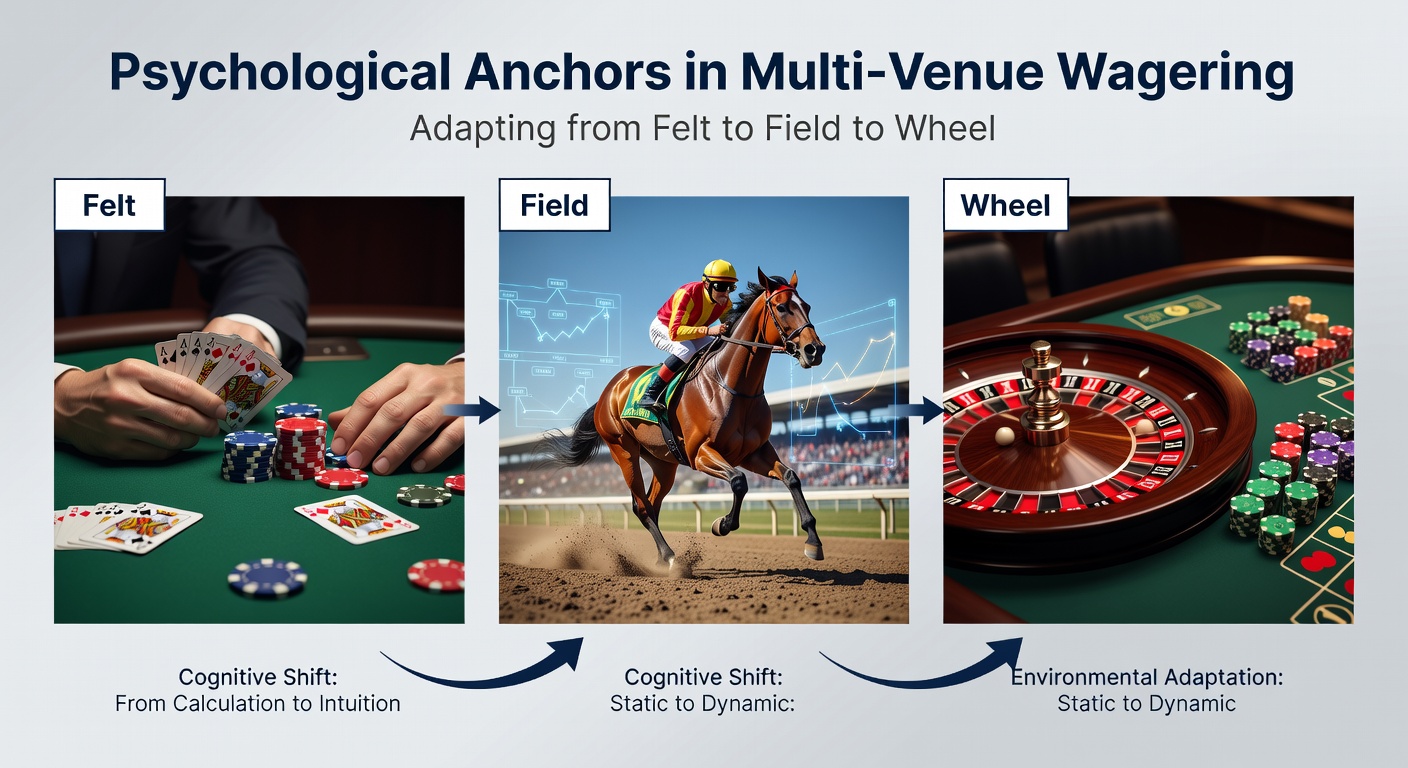
According to findings published by the National Council on Problem Gambling, individuals who consciously label each venue's primary anchor before beginning play report lower variance in session outcomes over six-month tracking periods. European Gaming and Betting Association summaries released in early 2026 further indicate that educational modules addressing cross-venue anchoring now appear in several operator responsible-gaming portals, although participation metrics vary widely by jurisdiction.
Practical Adjustments Documented by Practitioners
Coaches working with professional bettors describe routines that include resetting numerical reference points through neutral calculations performed away from any betting interface, and these routines produce consistent reductions in anchor persistence across venue changes. Take one cohort monitored over an 18-month span where average stake deviation from modeled values dropped by 9 percent after introduction of a standardized pre-session protocol. Observers note that the protocol works because it forces explicit comparison against venue-neutral benchmarks rather than allowing the previous environment's numbers to dominate.
Yet adaptation remains incomplete for many recreational participants who lack systematic review habits, and aggregate transaction data continues to show elevated clustering around figures first encountered in the initial venue of a given day. Researchers continue to examine whether real-time feedback tools delivered through betting applications can further attenuate these effects without disrupting the flow of play.
Conclusion
Psychological anchors operate as persistent reference points that travel with bettors across poker, sports, and wheel venues, and empirical records demonstrate both the strength of this carryover and the partial success of deliberate recalibration methods. Continued monitoring by academic and industry groups will clarify how emerging platform features influence these dynamics in the years ahead, while existing data already supplies clear markers for those tracking their own cross-venue patterns.