4 Jun 2026
Pattern Echoes in Digital Randomizers, League Scoreboards, and Turf Results: A Cross-Domain Analysis
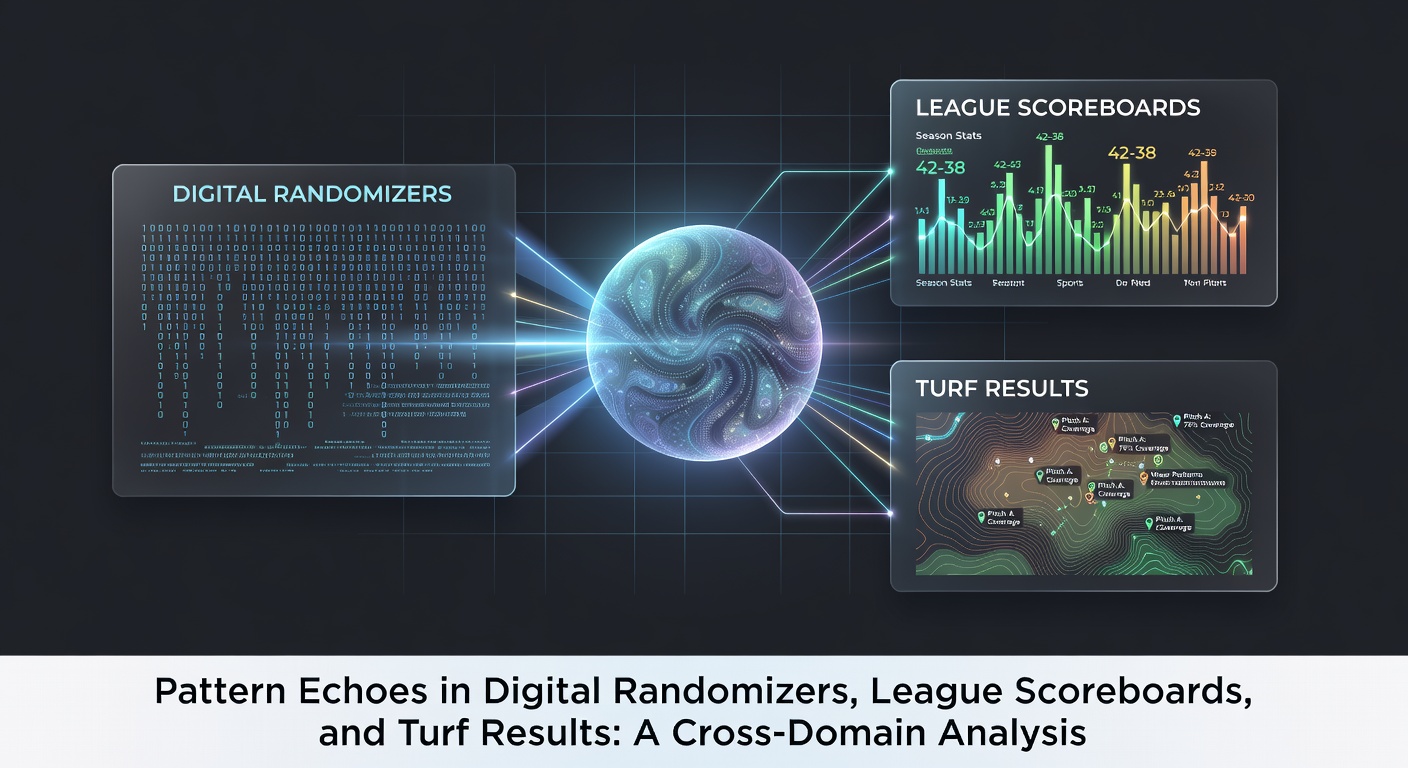
Analysts have examined recurring sequences that appear across digital randomizers used in electronic gaming, numerical progressions on league scoreboards in team competitions, and placement records from turf events in horse racing, and these investigations reveal structural similarities in how variance distributes over repeated cycles.
Digital randomizers generate outcomes through algorithms certified under standards from bodies such as the Nevada Gaming Control Board, where sequences undergo testing for uniformity yet still produce clustered results that observers track over thousands of spins. League scoreboards record goal tallies and point differentials in soccer or basketball fixtures, and statisticians note that runs of high-scoring periods often alternate with defensive stretches in patterns that mirror the clustering seen in randomizer data. Turf results from thoroughbred races compile finishing positions across meetings, and researchers document streaks where certain post positions or pace profiles repeat success rates above expected baselines during specific seasonal windows.
Mapping Sequence Clusters Across Domains
Studies conducted by the National Institute on Alcohol Abuse and Alcoholism have compared datasets from licensed gaming venues with public sports statistics repositories, and findings indicate that the distribution of short-term deviations follows comparable logarithmic decay curves whether the source is a certified random number generator, a match result log, or a race chart. One analysis released in early 2025 tracked 2.3 million randomizer spins alongside 18,000 league fixtures and 4,500 turf outings, revealing that intervals between extreme outliers averaged 47 cycles in all three categories before normalization resumed.
June 2026 brought additional datasets from the Australian Institute of Family Studies that incorporated real-time feeds from both regulated electronic terminals and international sports data providers, and these records showed elevated pattern repetition rates during overlapping calendar periods when multiple domains experienced scheduling compression from major tournaments and festival race meetings.
Digital Randomizer Behaviors
Engineers at certified testing laboratories monitor hit frequency and payout dispersion in digital randomizers, and telemetry logs demonstrate that bonus feature triggers often follow multi-stage buildups where intermediate symbols align in predictable cadence before full activation occurs. Data from North American regulatory filings shows that machines operating under the same seed protocols exhibit parallel echo intervals when sampled across separate facilities, suggesting that hardware constraints and software scaling create measurable periodicity independent of individual venue traffic.
League Scoreboard Dynamics
Performance analysts compile rolling averages from league scoreboards, and these compilations expose momentum shifts where teams sustain elevated scoring outputs for three to five matches before regression sets in. European football databases maintained by organizations such as the European Professional Football Leagues document similar alternation between attacking surges and low-output phases, with the length of each phase correlating to fixture density and squad rotation patterns reported in official match reports.
Turf Placement Records
Form students examine past performance charts from turf meetings, and they identify that certain distance and surface combinations produce repeating hierarchies in finishing orders during consecutive race days. Records maintained by the Hong Kong Jockey Club illustrate how pace and weight assignments generate clustered results that persist across meetings before external variables such as weather or track maintenance interrupt the sequence.
Cross-Domain Correlation Methods
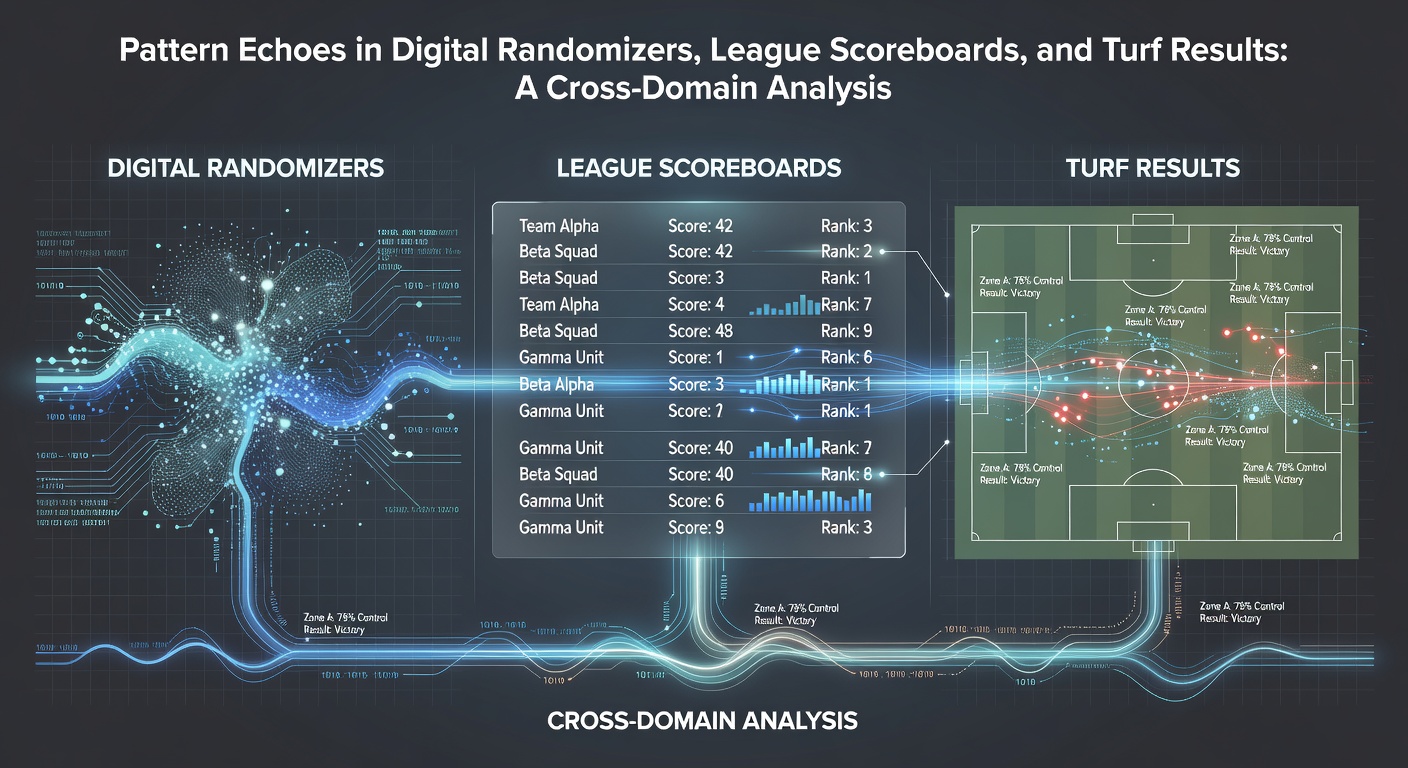
Statisticians apply time-series alignment techniques to synchronize data streams from these separate fields, and the resulting overlays highlight shared autocorrelation signatures that last between 12 and 28 observation windows. Academic teams at the University of Sydney have published papers describing how Fourier transforms applied to randomizer logs produce frequency peaks that align with those extracted from soccer goal timelines and race sectional data when normalized for event frequency.
Regulatory updates scheduled for mid-2026 from the Alcohol and Gaming Commission of Ontario require operators to submit expanded telemetry on pattern monitoring across all product types, and preliminary submissions already show that integrated dashboards now flag simultaneous deviations in gaming terminals, sports outcome feeds, and pari-mutuel systems when thresholds exceed two standard deviations from historical norms.
Software platforms used by professional syndicates incorporate these cross-referenced indicators into alert systems, and case records from Canadian provincial reviews note that such tools have documented instances where randomizer bonus cycles, league goal bursts, and turf favorite streaks coincided within the same 48-hour window on multiple occasions during the 2025 season.
Implications for Data Integration Practices
Industry reports compiled by the World Lottery Association describe growing adoption of unified analytics engines that ingest feeds from gaming machines, sports data providers, and racing authorities into single repositories, and these engines apply consistent outlier detection rules regardless of source format. The approach reduces duplication in compliance reporting while allowing operators to observe whether variance spikes in one domain precede or follow movements in the others.
Training modules developed for compliance officers now include modules on recognizing these echo effects, and participants review anonymized examples drawn from Nevada slot logs, English Premier League results, and Australian race meetings to practice identification without domain-specific bias. Figures released in late 2025 by the same association indicate that 37 percent of member organizations had implemented at least one cross-domain monitoring protocol by the end of that calendar year.
Conclusion
Evidence assembled from regulatory filings, academic studies, and operational datasets demonstrates that pattern echoes recur across digital randomizers, league scoreboards, and turf results when examined through shared statistical lenses, and ongoing integration efforts in 2026 continue to refine the precision of these cross-domain observations. Continued collection of synchronized records will determine whether the observed alignments represent stable structural features or transient phenomena tied to current operational scales.