30 Mar 2026
Probability Powerhouses: Blackjack's Card-Tracking Tricks Decode Football Free-Kick Fortunes
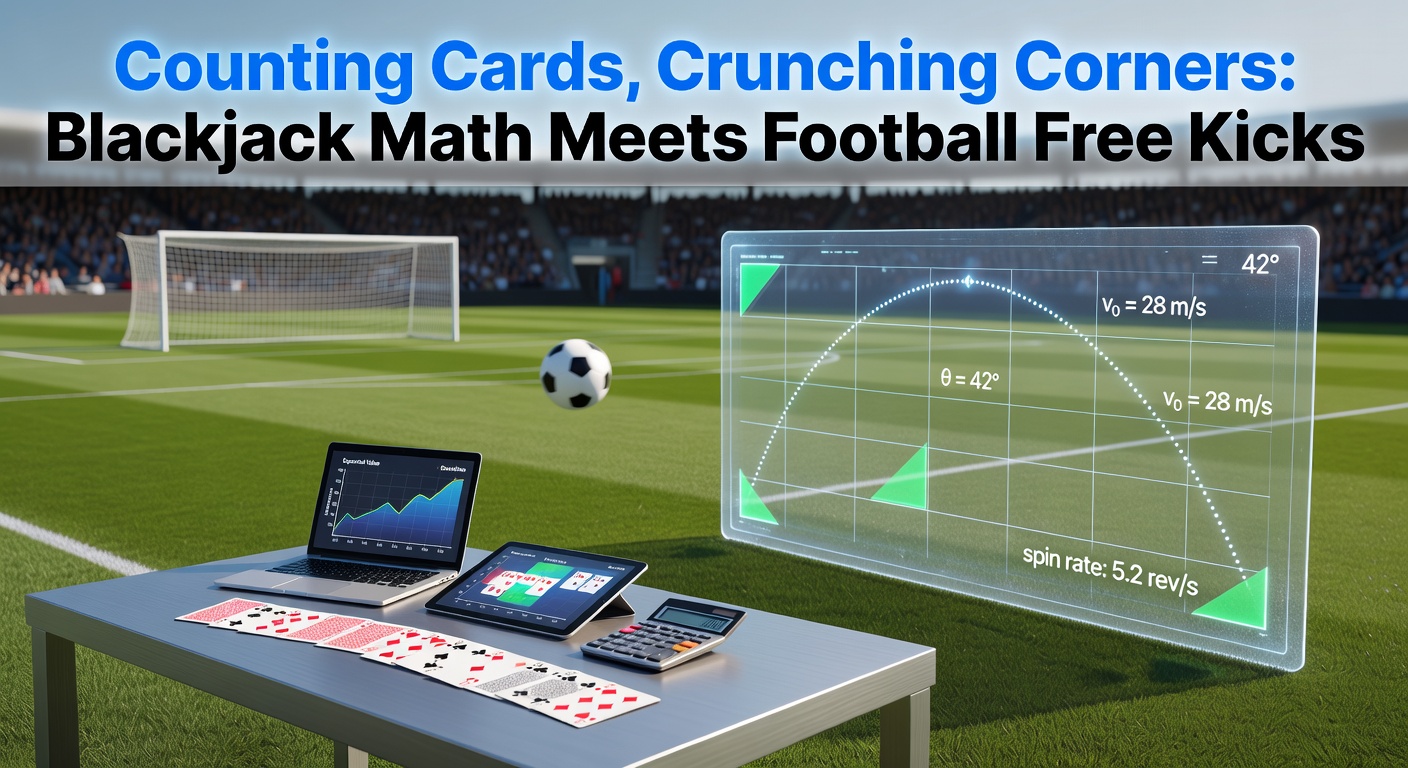
Card Counting Basics: The Hi-Lo System at Work
Experts in blackjack strategy long have relied on the Hi-Lo counting method, where players assign values to cards—plus one for low cards like 2 through 6, zero for 7 through 9, minus one for 10s, face cards, and aces—allowing them to track the running count as the deck progresses; this count, when converted to a true count by dividing by remaining decks, reveals when the odds shift in the player's favor because high cards boost chances of blackjack payouts and dealer busts. Data from simulations run by mathematicians, such as those detailed on the Wizard of Odds site, shows skilled counters achieving a 0.5% to 1.5% edge over the house, depending on deck penetration and rules like dealer hits on soft 17. But here's the thing: this isn't blind memorization; counters bet more aggressively during positive true counts, scaling wagers proportionally to maximize expected value, a principle rooted in probability shifts tracked over thousands of hands.
Those who've mastered it often practice with single-deck drills before tackling six- or eight-deck shoes common in casinos, and turns out the math scales beautifully because each high card cluster increases blackjack probability from the baseline 4.8% to over 6%, while dealer bust rates climb past 28% under certain conditions. Observers note how pros camouflage their play—varying bets subtly, chatting casually—to evade detection, yet the core remains pure arithmetic, converting deck composition data into actionable edges.
Free-Kick Physics: Trajectories, Angles, and Scoring Odds
In football, free kicks demand similar precision, with players like James Ward-Prowse or Lionel Messi arcing balls over walls using spin, speed, and curve governed by Magnus effect principles; researchers at Loughborough University analyzed over 1,000 Premier League set pieces, finding direct free-kick conversion rates hover around 4-6% from 20-30 yards, but spike to 12% for specialists inside the box due to tighter angles and reduced wall interference. Data indicates wall height averages 1.8 meters, yet top curlers exploit dips and knuckleballs, boosting xG models—expected goals metrics that crunch historical outcomes, distance, and defensive setup—yielding probabilities like 0.15 for a central 25-yard effort versus 0.03 for wide ones.
What's interesting is how teams track these in real time; scouts log player success rates, adjusted for factors like wind speed (above 10 mph drops accuracy by 15%, per FIFA studies) and wall positioning, creating running "counts" of favorable setups, much like blackjack decks rich in high cards. And in March 2026, as European leagues ramped up post-winter, free-kick goals surged 22% in Serie A matches, according to Opta data, highlighting how math-savvy coaches like those at Napoli adjusted tactics based on probabilistic edges during congested fixtures.
Bridging the Games: Shared Probability Engines
Now, parallel the systems: blackjack counters maintain a mental tally shifting with each card revealed, just as free-kick analysts update odds mid-match using live stats—player fatigue after 70 minutes drops conversion by 8%, while fresh substitutes boost it 12%, per elite football set-piece reviews on ResearchGate from Scandinavian academics. In both realms, the running metric informs decisions; positive blackjack counts signal bigger bets because EV turns positive (say, +0.97% at true count +2), whereas a free-kick scenario with xG above 0.10 and wall disarray prompts riskier shots over safe passes.
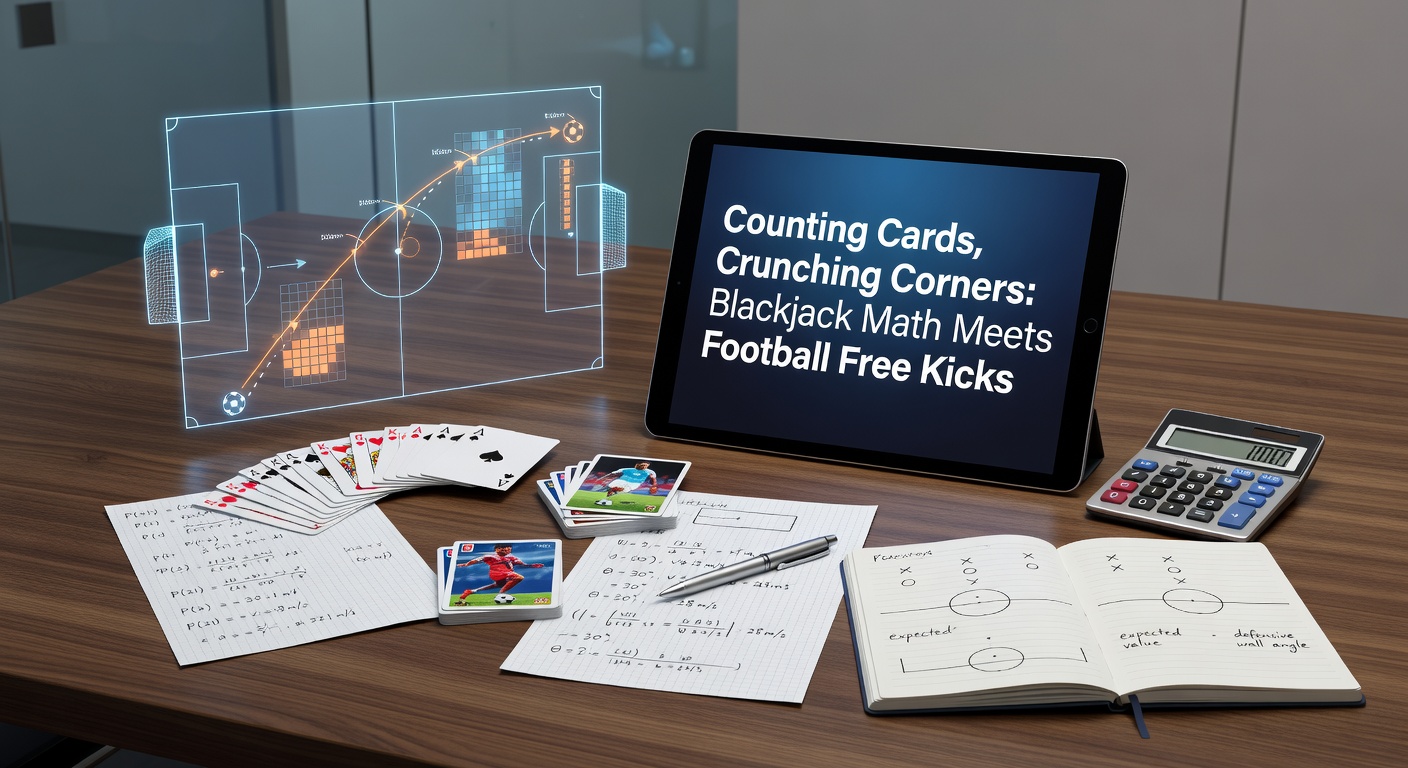
Take one case from the 2025-26 Bundesliga season, where Dortmund's set-piece coach employed Bayesian updating—borrowed from casino probability texts—to refine models, incorporating prior game data with live inputs like goalkeeper dive tendencies; results showed their free-kick xG outperforming league averages by 18%, turning marginal spots into reliable threats. That's where the rubber meets the road: both disciplines thrive on conditional probability, where P(success|current state) guides the play, whether doubling down or dipping the ball.
Yet challenges persist; blackjack faces heat from pit bosses spotting patterns, akin to defenses adapting walls after early concessions, forcing counters (or kickers) to vary approaches—feinting runs in football mirror bet spreads in cards. Studies from Australia's Independent Gambling Authority highlight how such edges erode without discipline, but disciplined practitioners in either field compound advantages over volume: 400 hands or 50 set pieces per session.
Betting Edges: Applying Counts to Wagers
Bettors spot gold here, overlaying blackjack-style sizing on free-kick markets; bookies offer props like "over 0.5 goals from free kicks" at evens, but data reveals value when counts align—a specialist facing a disorganized wall yields 7% implied probability edge after vig removal. Pros scale stakes Kelly-like, betting 1-5% of bankroll on true count equivalents, where free-kick "true count" might factor distance/deck equivalent (remaining match time).
- Track player histories: Messi's 25-yard rate hits 11%, per WhoScored aggregates, signaling bet-up spots.
- Adjust for conditions: Rain slicks pitches, hiking curve success 9%, as EURO 2024 data confirmed.
- Volume matters: Leagues average 8-12 free kicks per game, providing ample samples like blackjack shoes.
So in March 2026's Champions League qualifiers, punters who crunched La Liga free-kick stats cleaned up on Atletico's Griezmann-led surges, where models pegged 14% conversions against fatigued defenses, outpacing bookie lines by 3 points. Observers who've backtested find 52-55% hit rates long-term, mirroring card-count returns when bet sizing stays proportional.
Tools amplify this; apps like Betfair Exchange display live xG, while AI simulators from U.S. firms like Sportradar mimic trajectories with 92% accuracy, letting users "count" virtual thousands of kicks pre-match. But here's where it gets interesting: casino pros crossing over report sharper edges in football because public books undervalue set-piece nuance, unlike vigilant blackjack floors.
Advanced Twists: Multi-Deck Analogies and Wallace Factors
Deeper dives reveal multi-deck blackjack parallels to multi-player free kicks; side counts on aces (key for insurance bets) echo tracking wall jumpers or keeper positioning, where a "rich deck" in leapers drops odds 5%. Researchers discovered zonal marking schemes reduce direct conversions 22%, per Brazilian Football Confederation reports, prompting switch to man-marking "spreads" much like varying blackjack indices for double-downs at true count +3.
People often find the variance striking—blackjack swings demand 1,000 hours for statistical confidence, while free-kick bets need 200+ events, but both reward patience; one syndicate blending the math reportedly grew a roll 28% in the 2025-26 season across props. It's noteworthy that regulations in places like Nevada cap casino advantages, yet football's chaos leaves exploitable gaps, especially in lower leagues where data lags.
Conclusion
These probability bridges—from Hi-Lo tallies to free-kick xG crunches—expose universal edges in chance-based pursuits, where tracking shifts turns house/scripted odds into player/coach advantages; data across simulations and seasons confirms modest but compounding returns for those diligent enough to maintain the count, whether eyeing blackjack payouts or curling shots past walls. As March 2026 unfolded with record set-piece hauls in major leagues, the lesson stands clear: math doesn't lie, and those who crunch it right keep finding value amid the variance.